
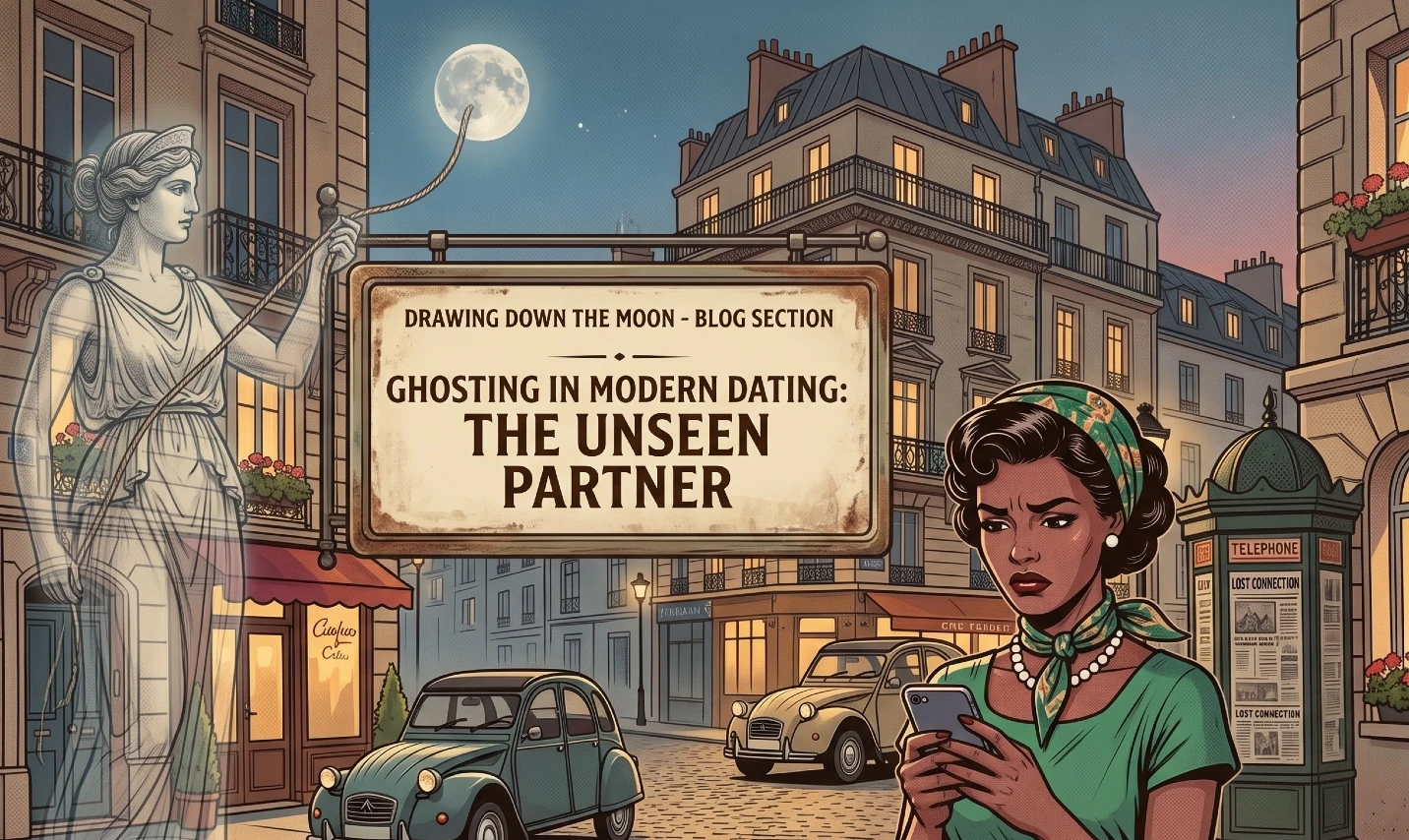
Modern dating comes with an entirely new vocabulary, but few words are thrown around as frequently—or as incorrectly—as “ghosting.” If you are currently staring at a silent phone, wondering why a promising connection suddenly vanished into thin air, you are certainly not alone.
As the CEO of Drawing Down the Moon, the UK’s most established romance matchmaking agency, Gillian McCallum has spent decades studying the anatomy of human connection. She and her team have helped thousands of relationship-minded singles find lasting love. But, over the years dating cultures and communication habits have evolved dramatically. Today, the term ghosting has strayed quite some way from its original, far more serious definition.
Defining the dating myth: what is true ghosting?
The definition of ghosting has shifted significantly in public opinion. Today, people use it to describe the frustration that happens when a love interest doesn’t respond to a text message before you have even met, or after just one or two casual dates. But that it not ghosting.
True ghosting happens when someone in a long-term, established relationship completely vanishes without a trace, leaving a partner with zero closure. It is the kind of deeply painful relationship breakdown where you genuinely find yourself contacting their family and friends just to ask if they know where the person is.
When someone you have only met once or twice stops replying to your messages, they haven’t ghosted you in the original sense of the meaning, they have just rejected you, though in modern dating terminology, many refer to this as ghosting. It is lazy and impolite, yes, but it is standard modern rejection, not a disappearance act
The psychology of avoidance: what are the real reasons behind ghosting?
When we look at why people choose to simply disappear rather than sending a polite, final breakup text, the psychological root causes are incredibly consistent. People ghost out of emotional unavailability and specific behavioural traits. These include:
- Fear and cowardice: A fundamental fear of confrontation or handling awkward conversations.
- Shame and guilt: Feeling bad about ending things and choosing to hide from those feelings instead of facing them.
- Laziness and/or immaturity: An inability to communicate like an adult, choosing the path of least resistance.
If you have been dating someone for a significant amount of time and they cut all contact and block you, it reveals the harsh reality that you never truly knew them.
Ghosting can also happen because breaking up gracefully is incredibly difficult. When you really, really like someone and they try to split up with you face-to-face, they will give you a reason. However, accepting that reason is one of the hardest things to do in dating. Often, the simple, straightforward reason for a breakup is rejected or argued against by the person being left. Because so many individuals detest confrontation and want to avoid an emotional debate, they view ghosting as an easier exit strategy than trying to justify their reasons to end the relationship.
Digital boundary setting: How to respond to ghosting in modern dating.
When someone pulls the disappearing act on you, the single best thing you can do for your self-esteem is accept the silence immediately.
- Don’t fight it: Do not chase them, do not demand answers, let them go.
- Don’t get emotionally involved early on: This is especially true if it concerns someone you have never met in person, or someone you have only been on one or two dates with.
- Keep your boundaries if they re-appear: Whatever you do, do not take that call, and do not reply to that text. They haven’t changed; they are simply looking for an ego boost.
Remember, this modern ghosting behaviour is actually doing you a huge favour. It tells you exactly where you stand with that person before you get emotionally involved. The person who truly loves and values you will never leave you guessing where you stand. Someone who loves and cherishes you would see how incredible you are and would never risk losing you by ghosting you.
Moving on: How can you get over ghosting without closure?
We all naturally crave closure when a relationship ends, but here is a liberating truth you need to read carefully: you don’t actually need it.
Relationships ending are usually only painful because we are mourning the idea of the person we wished they were, rather than the person they actually are.
Getting over a ghost requires a total mindset reset and a commitment to forget them. Unfortunately, there are no magical shortcuts; sometimes, healing simply takes time and a complete removal of their presence from your digital life.
Emotional resilience: How can I date after being rejected?
To protect yourself from the emotional fallout of modern dating behaviours, you must adjust how you approach early-stage connections. Start by building immediate resilience by implementing a few firm dating rules:
- Stop getting emotionally attached to strangers: Remind yourself that until you have spent real, consistent time together, you are simply getting to know a digital profile.
- Move from online to offline quickly: Do not spend weeks or months text-relationship building. Arrange to meet in person.
- Spend the first few dates in a public place: To keep yourself safe, never go back to their house on the first few dates.
- Beware the overly charming man: Excessive love-bombing early on is often a red flag for future ghosting behaviour.
Many people are simply bad at breaking up so keep in mind that when someone says, “It would be lovely to see you again,” at the end of a date, they are often saying it because it is easier than saying, “I never want to see you again.”
Most importantly, try to remember that if someone doesn’t want to see you again, it is not because you have a flaw in your personality or your looks. It simply means you don’t gel with them. They have every right to feel that way, in the exact same way you have the right to feel that way about others.
Red flags: how do you know if someone is ghosting or breadcrumbing you?
The distinction is simple. You know you have been ghosted because—like a ghost—they disappear completely and instantly. If, however, they are popping up every few weeks, sending sporadic text messages, or giving you little bits of their time and affection occasionally just to keep you on the hook, you are not being ghosted. You are being breadcrumbed. This is a form of emotional immaturity designed to keep you as an option without ever offering a true commitment. If someone is feeding you crumbs, recognize it for what it is, protect your dignity, and ditch them immediately. You deserve a dedicated partner, not the leftovers.

If you are ready to meet someone special, contact the friendly award winning matchmakers at Drawing Down the Moon Matchmaking.